
Executive Summary
Have you ever parked your car under a tree and returned to find it covered in a fine yellow powder?
Or wondered why some people begin sneezing the moment spring arrives, while others seem completely unaffected?
The answer often lies in something remarkably small.
Pollen.
Although each pollen grain is microscopic, plants produce them in extraordinary numbers as part of their natural reproductive cycle.
Most of the time, we hardly notice them.
Yet every year, billions of pollen grains travel through the air, carried by the wind or transported by insects, eventually settling on buildings, cars, clothing and even inside our homes.
In this article, we’ll explore what pollen is, why plants produce it, how it enters our homes and why it matters for indoor air quality.
Quick Facts
Pollen at a Glance
- Pollen is produced by plants as part of reproduction.
- Individual pollen grains are microscopic.
- Wind can carry some types of pollen over surprisingly long distances.
- Pollen can enter homes through open windows, doors, clothing and shoes.
- The amount and types of pollen vary by location, season and surrounding vegetation.
The Incredible Journey of a Pollen Grain
Imagine standing beneath a flowering tree on a calm morning.
Although everything appears still, countless microscopic pollen grains may already be drifting through the air around you.
Each one has a remarkable mission.
Its purpose is to reach another flower of the same species so the plant can reproduce.
Some plants rely on insects such as bees and butterflies to transport pollen.
Others release enormous quantities into the wind, trusting that at least a small number of grains will eventually reach their destination.
It’s a strategy based on numbers.
If millions of grains are released, only a tiny fraction needs to succeed.
Science Minute
What Exactly Is Pollen?
Pollen is not dust.
Nor is it a pollutant in the usual sense.
It is a natural biological particle produced by seed plants.
Each pollen grain carries the male reproductive cells needed for fertilisation.
Different plants produce pollen with different shapes, sizes and surface structures.
Under a microscope, pollen grains often look surprisingly beautiful, with intricate patterns and textures that help scientists identify which plant they came from.
Why Do Some Plants Produce So Much Pollen?
Have you ever wondered why certain trees seem to cover cars and pavements with yellow powder?
Plants that depend on the wind face a difficult challenge.
Unlike insects, the wind cannot deliver pollen to a specific flower.
Instead, it scatters pollen in every direction.
To improve the chances of successful reproduction, wind-pollinated plants release vast numbers of pollen grains.
Most never reach their target.
But enough do to keep the species thriving.
Nature has solved the problem through abundance.
How Does Pollen Get Into Our Homes?
Many people assume pollen only exists outdoors.
In reality, it often finds its way indoors through perfectly ordinary activities.
For example:
- Opening windows and doors.
- Pollen settling on clothing.
- Shoes carrying particles inside.
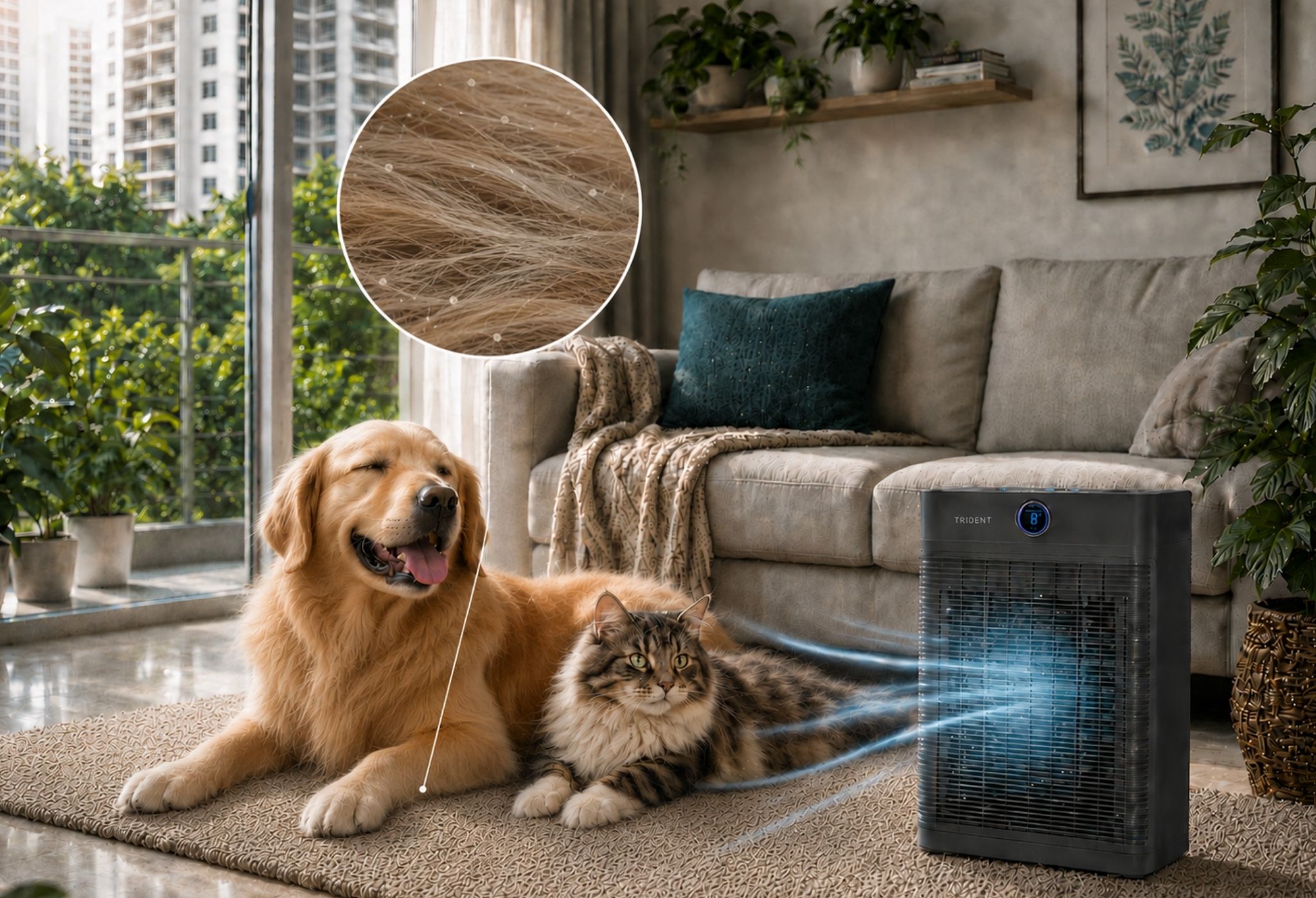
- Pets returning from outdoors.
- Outdoor air entering through ventilation.
Once indoors, pollen can settle onto floors, furniture and other household surfaces, becoming part of the wider mix of indoor particles we’ve explored throughout this Academy.
Did You Know?
Some pollen grains are so distinctive that scientists can identify the type of plant they came from simply by examining them under a microscope.
This is one reason pollen analysis is used in fields ranging from environmental science to archaeology.
Living Comfortably During Pollen Seasons
For many people, pollen is simply part of the changing seasons.
For others, it can bring uncomfortable symptoms such as sneezing, itchy eyes or a runny nose.
Fortunately, there are practical ways to reduce unnecessary exposure indoors without trying to eliminate nature from our lives.
The goal is balance.
Not isolation.
Practical Ways to Reduce Indoor Pollen
Keep Floors and Surfaces Clean
Pollen that enters the home eventually settles onto household surfaces.
Regular cleaning helps remove these particles before they accumulate.
Change Clothing After Spending Time Outdoors
Clothing can collect pollen during outdoor activities.
Changing clothes after returning home may reduce the amount brought indoors, especially during periods of high pollen activity.
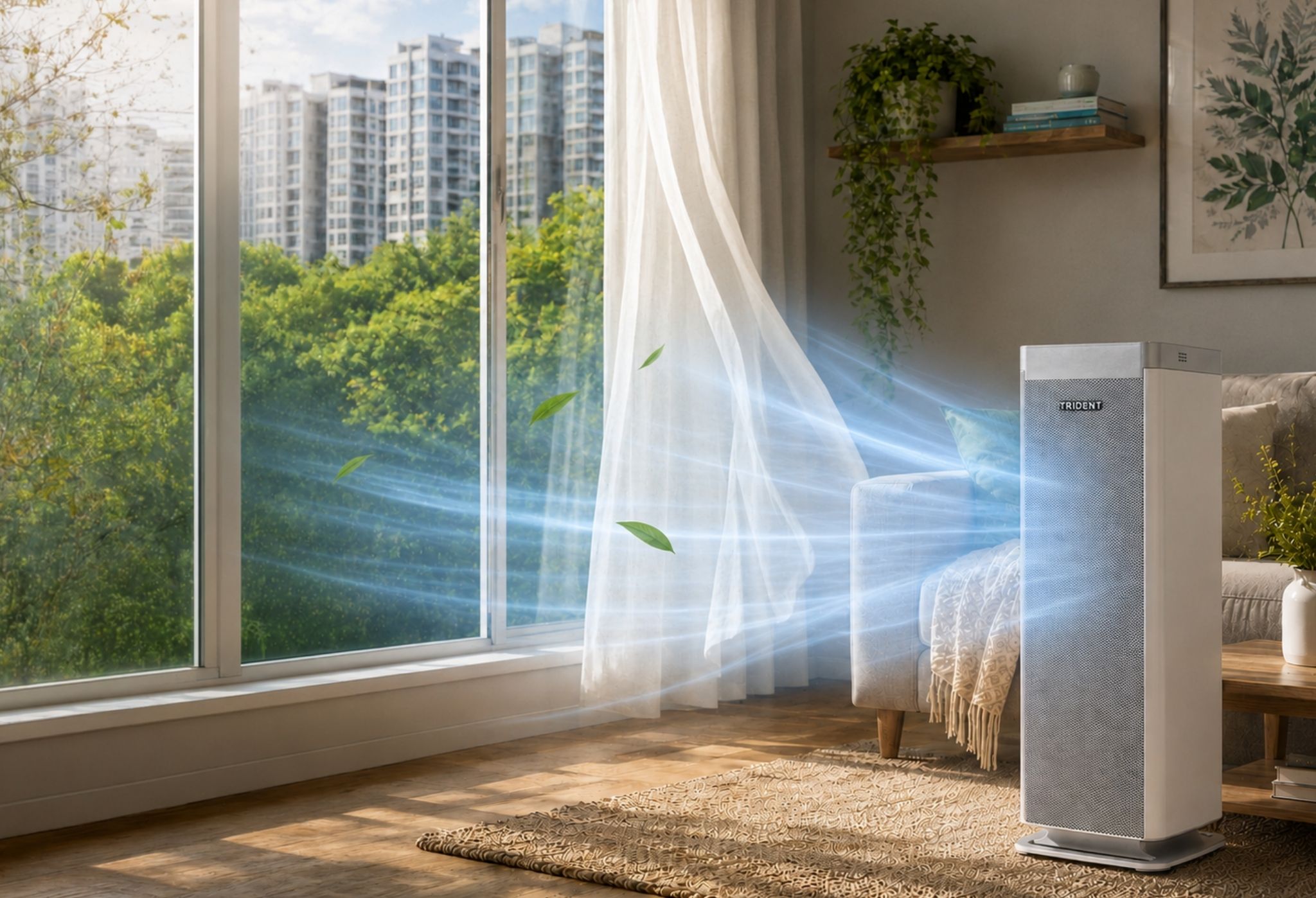
Consider Ventilation Carefully
Fresh air is important, but so are outdoor conditions.
During periods when pollen levels are especially high, some people may choose to limit the amount of outdoor air entering the home.
At other times, natural ventilation remains an important part of maintaining a comfortable indoor environment.
As we’ve learned throughout this Academy, good indoor air quality is about making informed decisions rather than following a single rule.
Air Purifiers and Pollen
One question often asked is:
“Can an air purifier help with pollen?”
Pollen that has already settled on furniture or floors still needs to be removed through normal cleaning.
However, pollen grains that become airborne may be captured by appropriately designed air purification systems as air passes through them.
Air purification therefore complements—but does not replace—good housekeeping and sensible ventilation.
Myth vs Fact
Myth
Pollen is simply another form of dust.
Fact
Pollen is a natural biological particle produced by plants for reproduction. Dust is a mixture of many different particles from both indoor and outdoor sources.
Myth
Only flowers produce pollen.
Fact
Many trees, grasses and weeds also produce pollen, often in very large quantities.
Myth
If I can’t see pollen, there isn’t any around.
Fact
Individual pollen grains are microscopic and usually invisible to the naked eye.
Myth
Keeping windows closed permanently is always the best solution.
Fact
Ventilation and outdoor air quality should always be considered together. The best approach depends on weather, pollen levels and the needs of the household.
Frequently Asked Questions
Is yellow dust on my car always pollen?
Not necessarily.
Depending on where you live and the time of year, it may be pollen, dust, or a mixture of both.
Can pollen remain indoors after the season ends?
Pollen that has settled indoors is gradually removed through normal household cleaning.
Once outdoor pollen production decreases, less new pollen enters the home.
Do tropical countries have pollen?
Yes.
Although pollen seasons may be less pronounced than in countries with four distinct seasons, many tropical plants, grasses and trees still produce pollen throughout the year.
Can pets bring pollen indoors?
Yes.
Pollen can settle on a pet’s fur during outdoor walks and later be carried into the home.
Inside the Lab
When environmental scientists study pollen, they don’t simply count how many grains are present.
They identify which plants produced them.
Different plant species release pollen with different shapes, sizes and seasonal patterns.
By analysing pollen, researchers can better understand local vegetation, seasonal changes and the movement of airborne biological particles.
The tiny grains floating through today’s air can reveal remarkable stories about the environment around us.
Five Things Most People Don’t Know
- Pollen is produced for plant reproduction, not as a form of pollution.
- Different plant species produce pollen with distinctive shapes and structures.
- Pollen can travel indoors on clothing, pets and moving air.
- Every home has its own unique pollen fingerprint depending on its surroundings.
- Managing indoor pollen involves balancing ventilation, cleaning and appropriate air management strategies.
One-Minute Summary
If you remember only one thing from this article, remember this:
Pollen is one of nature’s most remarkable travellers.
Produced by plants as part of reproduction, these microscopic grains journey through the air, eventually becoming part of the indoor environment we experience every day.
Understanding that journey helps us appreciate both the beauty of nature and the importance of managing our indoor spaces thoughtfully.
Key Takeaways
- Pollen is a natural biological particle produced by plants.
- It enters homes through open windows, clothing, pets and outdoor air.
- Individual responses to pollen vary depending on the immune system.
- Weather, surrounding vegetation and seasons all influence pollen levels.
- Good housekeeping, thoughtful ventilation and appropriate air cleaning strategies can help manage indoor pollen.
Looking Ahead
So far, we’ve explored particles, gases, fungi, dust mites, pets and pollen.
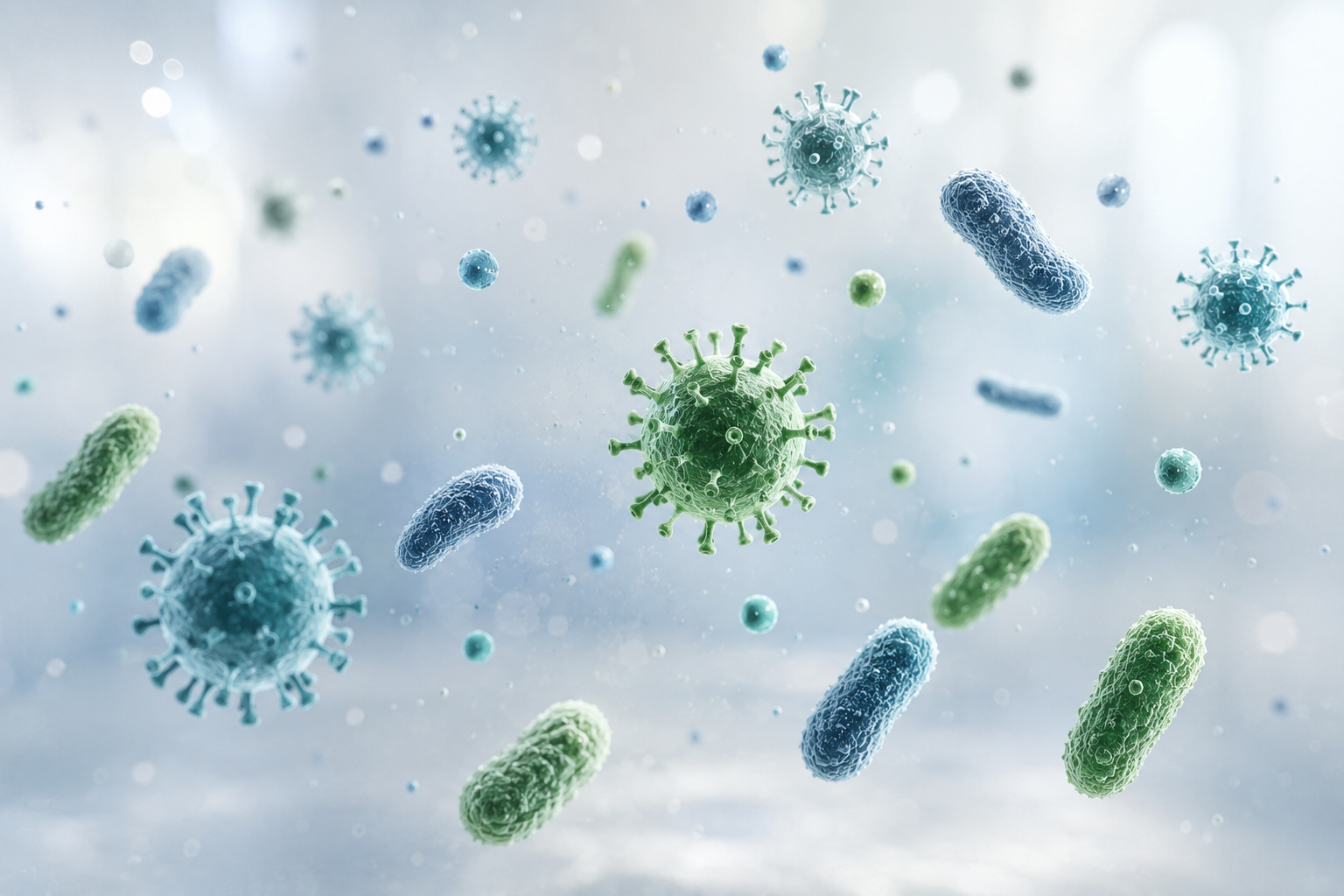
But there is another invisible world that shares our indoor spaces every day.
Microorganisms.
What is the difference between viruses and bacteria? How do they spread indoors? And what role do ventilation and indoor air management play in creating healthier indoor environments?
In our next article, we’ll explore the fascinating science of the invisible microbes that surround us every day.