
Executive Summary
Almost every homeowner has encountered mould.
Perhaps you’ve noticed black spots appearing on a bathroom ceiling.
Maybe a leather bag stored in a wardrobe developed a musty smell.
Or perhaps your favourite pair of shoes emerged from storage covered in white fuzzy patches.
The first reaction is usually surprise.
“How did mould get there? I just cleaned it.”
The truth is that mould isn’t simply a sign of poor housekeeping.
In many cases, it is the result of moisture, humidity and environmental conditions that allow microscopic fungi already present in the air to grow.
This is particularly relevant in Singapore, where the tropical climate creates ideal conditions for mould if moisture is allowed to accumulate.
In this article, we’ll explore what mould really is, why it grows indoors, why even clean homes can develop mould, and practical ways to reduce the chances of it returning.
Quick Facts
Mould at a Glance
- Mould is a type of fungus.
- Mould reproduces by releasing microscopic spores into the air.
- Spores are present almost everywhere, indoors and outdoors.
- Mould only grows when suitable moisture is available.
- Humidity, condensation and water leaks are common contributors.
- Removing visible mould is only part of the solution—controlling moisture is equally important.
The Mystery of the Clean Home
Imagine two neighbours.
Both live in identical apartments.
Both clean their homes every week.
Both use air-conditioning.
Yet one repeatedly finds mould growing inside wardrobes and on bathroom ceilings.
The other rarely sees mould at all.
Why?
Many people assume mould grows because a home is dirty.
In reality, cleanliness is only one small part of the story.
The real question isn’t:
“Is the house clean?”
It’s:
“Is there enough moisture for mould to grow?”
Science Minute
What Is Mould?
Mould is a microscopic fungus.
Unlike plants, mould does not produce its own food through sunlight.
Instead, it grows by breaking down organic materials in its surroundings.
Thousands of mould species exist throughout the natural world.
They play an essential ecological role by helping decompose fallen leaves, dead trees and other organic matter.
Without fungi, forests would eventually become buried beneath layers of undecomposed material.
In other words,
Mould itself is a natural part of Earth’s recycling system.
The challenge begins when mould starts growing inside our homes instead of outdoors.
If Spores Are Everywhere, Why Doesn’t Everything Become Mouldy?
This is one of the most important questions in indoor air science.
The answer lies in understanding the difference between a spore and active mould growth.
Think of a mould spore as a seed.
A seed scattered onto dry concrete doesn’t grow.
The same seed placed into moist soil with warmth and nutrients may quickly sprout.
Mould spores behave similarly.
Simply having spores in the air does not mean mould will grow.
They need the right conditions.
Most importantly:
They need moisture.
The Four Ingredients Mould Needs
Like any living organism, mould has basic requirements.
Imagine trying to bake bread.
Without flour, water or heat, nothing happens.
Similarly, mould generally needs four things:
- Moisture
This is the single most important factor.
Without sufficient moisture, mould cannot establish active growth.
- Food
Mould doesn’t need obvious food scraps.
Many everyday materials provide enough nutrients, including:
- Wood
- Paper
- Cardboard
- Cotton
- Leather
- Dust
- Wallpaper
- Fabric
- Drywall
Even a thin layer of household dust can provide enough organic material for some mould species.
- Suitable Temperature
Most indoor environments are already within the temperature range that mould prefers.
Singapore’s climate is particularly favourable.
- Time
Mould doesn’t appear instantly.
If moisture remains for days or weeks, spores have time to germinate and colonies begin to develop.
Why Singapore Is Different
Singapore’s tropical climate is one of the defining factors affecting indoor air quality.
Outdoor humidity frequently remains high throughout the year.
During the monsoon season, prolonged periods of rain can keep the environment damp for days.
Air-conditioned rooms add another layer of complexity.
When warm humid air contacts cold surfaces, condensation may form.
That thin film of moisture is often invisible—but for mould, it may be enough.
This is why mould frequently appears:
- Behind wardrobes placed against external walls.
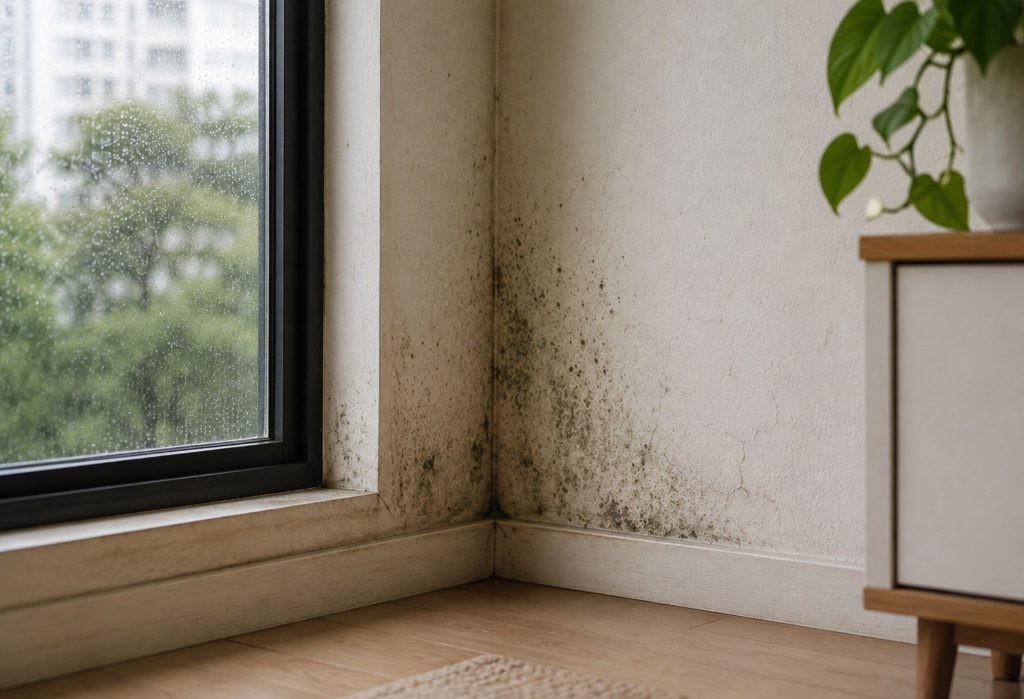
- Around window frames.
- Inside shoe cabinets.
- On bathroom ceilings.
- Near poorly ventilated corners.
- Around air-conditioning units.
The issue is rarely that these places are dirty.
The issue is that they stay damp longer than the rest of the room.
Did You Know?
A mould colony you can see is only part of the organism.
The visible patch is often the “fruit” of a much larger colony spreading across or within the material.
By the time mould becomes obvious to the eye, it may already have been growing unnoticed for some time.
Common Places Mould Appears
Every home has areas that deserve a little extra attention.
In Singapore, the most common include:
Bathrooms
Warm temperatures, steam from showers and limited ventilation make bathrooms a favourite location.
Wardrobes
Closed wardrobes restrict airflow.
Leather bags, shoes and clothing may absorb moisture from humid air.
Kitchens
Steam generated during cooking and washing creates moisture that can settle on cool surfaces.
Air-Conditioners
Condensation naturally forms during cooling.
If drainage or maintenance is poor, mould can develop on coils or inside drain pans.
Windows
Condensation around window frames can encourage mould growth, particularly if moisture remains trapped.
Why Does Mould Keep Coming Back?
One of the most frustrating experiences for homeowners is this:
You scrub away every visible trace of mould.
The wall looks spotless.
The bathroom smells fresh.
A few weeks later…
The mould is back.
Why?
Many people assume they didn’t clean thoroughly enough.
In reality, removing visible mould is only part of the story.
Remember our seed analogy.
Imagine pulling the leaves off a weed without removing the conditions that allowed it to grow.
If the soil remains moist and sunlight is plentiful, another weed will soon appear.
Mould behaves in a similar way.
Cleaning removes what you can see.
But if the underlying moisture problem remains, spores that are already present in the air may simply begin growing again.
The lesson is simple:
Removing mould is important. Preventing moisture is even more important.
Humidity vs Water Leaks
Many homeowners use the words humidity and moisture interchangeably.
They’re related—but they’re not the same.
Think of humidity as water floating in the air.
Think of a leak as liquid water sitting on a surface.
Both can encourage mould, but they do so in different ways.
High Humidity
When the air contains a large amount of water vapour, materials such as leather, fabrics, timber and drywall may slowly absorb moisture.
Over time, these materials can become damp enough to support mould growth.
Water Leaks
A leaking pipe, roof or window introduces liquid water directly into building materials.
This often creates ideal conditions for mould if the area is not dried promptly.
Unlike high humidity, leaks usually affect a specific location.
Humidity, however, can influence an entire room.
Condensation: The Invisible Source of Moisture
Many homeowners never notice condensation until it becomes a problem.
Imagine taking a cold drink out of the refrigerator.
Within minutes, droplets of water appear on the outside of the glass.
The water didn’t leak through the glass.
It came from moisture already present in the surrounding air.
The same thing can happen in your home.
When warm, humid air touches a cool surface—such as a window, a wall cooled by air-conditioning or parts of an air-conditioner—water vapour can condense into tiny droplets.
Sometimes those droplets are obvious.
Other times, they form such a thin film that you barely notice them.
Yet even this invisible moisture can be enough for mould to establish itself over time.
Science Minute
Air Doesn’t Have to Feel Wet
One of the biggest misconceptions is that if a room feels comfortable, it must also be dry.
Not necessarily.
Air can contain a surprising amount of water vapour without feeling damp to us.
This is why humidity is measured with instruments rather than judged by touch alone.
Our senses are useful—but they don’t always tell the full story.
Why Wardrobes Are So Vulnerable
Almost every Singaporean family has experienced this at least once.
You open a wardrobe after several weeks.
A leather handbag smells musty.
Shoes have white patches.
Perhaps a jacket has tiny dark spots.
Why wardrobes?
Wardrobes create the perfect combination of conditions that mould enjoys:
- Limited airflow
- Darkness
- Fabrics and leather that can retain moisture
- Surfaces that remain undisturbed for long periods
If the wardrobe is placed against an external wall, the situation can become even more favourable because airflow behind the cabinet is often restricted.
The result is a tiny microclimate where humidity may remain elevated compared with the rest of the room.
Bathrooms: More Than Just Steam
Bathrooms seem like an obvious place for mould.
But the reason isn’t simply because water is present.
It’s because moisture often remains long after a shower has ended.
Steam settles onto ceilings, walls and grout.
If ventilation is poor, these surfaces may remain damp for extended periods.
Repeated day after day, this creates ideal conditions for mould.
A bathroom that dries quickly after every shower is generally less favourable for mould than one that stays damp for hours.
Air-Conditioners and Mould
Many people are surprised to learn that air-conditioners can both help reduce humidity and become places where mould develops.
How can both be true?
The answer lies in condensation.
As an air-conditioner cools warm indoor air, water vapour naturally condenses on the cooling coil.
This water is designed to drain away.
If drainage is obstructed, maintenance is neglected or moisture remains trapped, mould can begin growing on damp internal surfaces.
This is one reason regular servicing is important—not only for cooling performance but also for indoor hygiene.
Why Bleach Isn’t Always the Complete Answer
Bleach is one of the first products many people reach for when they see mould.
It can be effective for cleaning certain hard, non-porous surfaces.
However, simply bleaching visible mould doesn’t necessarily solve the underlying moisture problem.
If the wall, timber or surrounding environment remains damp, mould may return.
That’s why professionals often focus on two separate tasks:
- Remove the existing mould safely.
- Identify and correct the moisture source.
Without the second step, the first may only provide temporary improvement.
Can Mould Affect Indoor Air Quality?
When most people think about mould, they picture the dark patches growing on a wall or ceiling.
But the visible mould is only part of the story.
As mould grows, it can release microscopic spores into the surrounding air as part of its natural life cycle.
These spores are usually invisible to the naked eye and can be carried by air currents throughout a room.
Whether or not this becomes a problem depends on many factors, including:
- The amount of mould present
- The species of mould
- Air movement within the home
- How long the mould has been growing
- The sensitivity of the people living there
For this reason, indoor air scientists are interested not only in what can be seen, but also in what may be suspended in the air.
Why Some People Notice Mould More Than Others
Have you ever visited a friend’s home and immediately noticed a musty smell, while they insisted everything smelled perfectly normal?
You’re not imagining it.
Our sense of smell adapts remarkably well.
When we spend long periods in the same environment, our brains gradually pay less attention to familiar odours.
Visitors experience the home with “fresh noses.”
This is why homeowners are sometimes surprised when guests notice a damp smell that they themselves no longer detect.
Once again, smell is helpful—but it is not a reliable measure of indoor air quality.
The Best Way to Prevent Mould
People often ask:
“What’s the best mould remover?”
The better question is:
“How do I stop mould from growing in the first place?”
The answer is surprisingly simple.
Control moisture.
Everything else becomes easier when moisture is managed.
That means:
Improve Ventilation
Fresh air helps remove excess moisture from indoor spaces when outdoor conditions are suitable.
Bathrooms, kitchens and laundry areas particularly benefit from good ventilation.
Fix Water Leaks Promptly
A small leak behind a cabinet may go unnoticed for months.
Unfortunately, mould doesn’t need much time once moisture is available.
Addressing leaks early is usually far easier than repairing water-damaged walls later.
Reduce Persistent Dampness
Dry wet surfaces promptly.
Avoid allowing towels, bath mats or damp clothing to remain wet for extended periods in poorly ventilated spaces.
Keep Air Moving
Still air allows moisture to linger.
Ceiling fans, ventilation systems and sensible placement of furniture can all help improve air circulation.
For example, leaving a small gap between large wardrobes and external walls may encourage better airflow in some homes.
Regular Maintenance
Air-conditioners, exhaust fans and dehumidifiers perform best when maintained according to the manufacturer’s recommendations.
Good maintenance supports both equipment performance and indoor comfort.
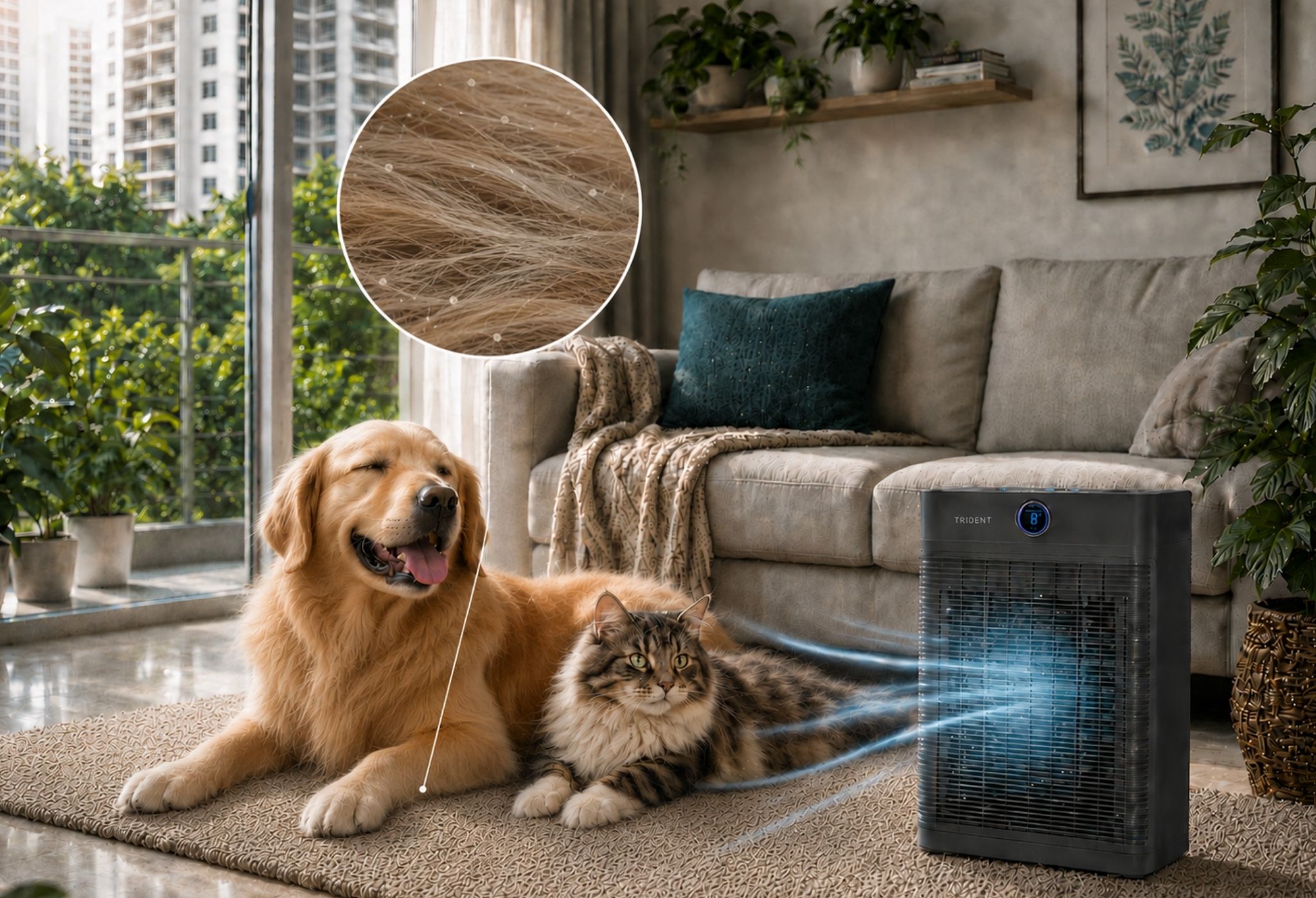
Can an Air Purifier Remove Mould?
This is a common question, and it’s important to answer it carefully.
An air purifier and moisture control do different jobs.
If mould is actively growing on a wall, inside a wardrobe or beneath flooring, the first priority is to identify and address the source of moisture. An air purifier cannot stop mould from growing on a damp surface.
However, depending on its design and filtration technology, an air purifier may help reduce airborne particles, including mould spores suspended in the air.
Think of it this way:
- Moisture control helps prevent mould growth.
- Cleaning removes visible mould from affected surfaces.
- Air purification may help improve airborne particle levels while the underlying moisture issue is being addressed.
These approaches complement one another—they are not substitutes.
Myth vs Fact
Myth
Mould only grows in dirty homes.
Fact
Even spotless homes can develop mould if moisture remains for long enough.
Myth
If I clean the mould, the problem is solved.
Fact
Cleaning removes visible growth, but mould may return if the underlying moisture source remains.
Myth
Mould only appears after flooding.
Fact
Long-term high humidity, condensation or slow leaks can also create favourable conditions.
Myth
A musty smell always means there is visible mould.
Fact
Sometimes the source is hidden behind furniture, inside wall cavities or within air-conditioning systems.
Frequently Asked Questions
Why does mould appear inside my wardrobe but nowhere else?
Wardrobes often have limited airflow and may trap moisture, especially if they are packed with clothing or placed against cooler external walls.
Does air-conditioning prevent mould?
Air-conditioners can help reduce indoor humidity during operation. However, if condensation is not drained properly or maintenance is neglected, mould can also develop inside the unit.
Can mould grow on leather?
Yes.
Leather is an organic material and, when exposed to sufficient moisture over time, can support mould growth.
Should I repaint over mould?
Painting over mould without addressing the underlying moisture problem is generally a temporary cosmetic solution. If mould is still active beneath the paint, it may eventually reappear.
Inside the Lab
When scientists investigate mould problems, they don’t begin by asking:
“Which cleaning product should we use?”
Instead, they ask:
“Where is the moisture coming from?”
That single question often reveals the real cause.
A leaking pipe. Poor ventilation. Condensation. High indoor humidity. Blocked drainage.
Only after understanding the source of moisture do scientists and building professionals decide on the most appropriate remediation strategy.
In indoor air science, understanding the environment is usually more important than simply treating the symptoms.
Five Things Most People Don’t Know
- Mould spores are already present in almost every indoor and outdoor environment.
- A clean home can still develop mould if enough moisture is present.
- The visible mould patch is often only part of a larger colony.
- Condensation on cool surfaces can provide enough moisture for mould to establish itself.
- Preventing mould is usually easier—and less expensive—than removing established mould growth.
One-Minute Summary
If you remember only one thing from this article, remember this:
Mould doesn’t appear because spores suddenly arrive in your home.
The spores were probably already there.
The real question is whether your home has accidentally provided the one ingredient mould cannot live without:
Moisture.
Control moisture, and you’ve removed the single most important requirement for mould growth.
Key Takeaways
- Mould is a natural fungus that reproduces by releasing microscopic spores.
- Spores are common in both indoor and outdoor environments.
- Moisture—not dirt—is the primary factor that allows mould to grow indoors.
- High humidity, condensation and water leaks are common causes of mould problems in Singapore homes.
- Preventing moisture is generally more effective than repeatedly cleaning visible mould.
Managing indoor air quality often requires a combination of ventilation, maintenance, sensible moisture control and, where appropriate, air purification.
Looking Ahead
Mould isn’t the only microscopic material that affects the air inside our homes.
Even in homes without mould, the air may contain tiny biological particles from another familiar source:
Dust mites.
Why do they thrive in bedrooms? Why are they so common in tropical climates? And why are the mites themselves often less of a problem than what they leave behind?
In our next article, we’ll explore the fascinating science of dust mites and why your bed can become their favourite home.