
Executive Summary
When people think about air pollution, they often picture traffic congestion, factory emissions or haze. While outdoor pollution is a real concern, many people are surprised to learn that the air inside homes, offices and schools can sometimes contain higher concentrations of certain pollutants than the air outside.
Modern buildings are designed to be energy efficient. Doors and windows remain closed for long periods, air-conditioning recirculates indoor air, and many everyday activities continuously introduce pollutants into enclosed spaces. Cooking, cleaning, furniture, paints, electronics, pets and even the occupants themselves all contribute to indoor air quality.
Understanding where these pollutants come from is the first step towards creating a healthier indoor environment
Why This Matters
Imagine two glasses of water.
One sits beneath a running tap, where fresh water constantly flows in while old water flows out.
The other sits on a table. Every hour, someone adds a few drops of food colouring. No one empties the glass.
Which glass will become more contaminated over time?
Indoor air behaves much like the second glass.
Every day, tiny amounts of pollutants are introduced into our homes. Individually, they may seem insignificant—a little cooking smoke, a trace of cleaning spray, a small amount of dust carried in on shoes, gases released from new furniture, moisture from a hot shower. Yet in an enclosed environment, these pollutants can gradually accumulate if they are not adequately removed.
This does not mean that every home has unhealthy air. Rather, it highlights an important principle of indoor air quality: concentration depends not only on how much pollution is generated, but also on how effectively it is removed.
The Science Minute
Indoor Air Is a Dynamic System
Many people imagine air inside a room as being still.
In reality, indoor air is constantly moving.
Warm air rises. Cool air sinks. Air-conditioning creates circulation patterns. People walking through a room disturb settled dust. Opening a door changes air pressure. Even sunlight warming a window can create gentle air currents.
At the same time, pollutants are continuously entering and leaving this invisible system.
Think of your home not as a static box, but as a living environment where particles, gases and moisture are constantly interacting.
Understanding this helps explain why maintaining good indoor air quality is more than simply opening a window once a day.
Why Outdoor Air Often Appears Worse
Outdoor pollution is highly visible.
We can see haze.
We notice vehicle exhaust.
We smell smoke.
Factories and traffic immediately draw our attention because they are obvious.
Indoor pollution, on the other hand, is largely invisible.
Fine particles are too small to see.
Many gases have little or no smell.
Some pollutants continue to be released quietly from building materials for months after renovation.
Others appear only during specific activities such as frying food or using household cleaning products.
Because we cannot easily detect many indoor pollutants with our senses, it is easy to assume the air inside our homes is always cleaner than the air outside.
In reality, indoor air quality depends entirely on what is happening inside the building.
A Home Is Like an Ecosystem
Every home has its own unique indoor environment.
A family that cooks three meals a day experiences different air quality from someone who rarely uses the kitchen.
A home with two dogs contains different airborne particles from one without pets.
A newly renovated apartment behaves differently from a home that has been occupied for twenty years.
Even two neighbouring apartments in the same building may have completely different indoor air quality because of differences in ventilation, occupancy, furnishing materials and daily habits.
This is why there is no single definition of “clean indoor air.” Instead, indoor air quality reflects the combined effects of many different factors working together.
The Four Main Categories of Indoor Pollutants
Although hundreds of different substances can be found indoors, most fall into four broad categories:
- Particulate Matter
Tiny solid or liquid particles suspended in the air.
Examples include:
- PM2.5
- Dust
- Smoke
- Pollen
- Pet dander
- Cooking aerosols
These particles vary enormously in size. Larger particles settle quickly onto surfaces, while finer particles may remain suspended for hours.
- Gaseous Pollutants
Invisible gases released from household products and activities.
Examples include:
- Volatile Organic Compounds (VOCs)
- Formaldehyde
- Cooking gases
- Cleaning chemicals
- Fragrances
Unlike dust, gases cannot be captured simply by wiping surfaces clean.
- Biological Contaminants
Living organisms or materials originating from living organisms.
These include:
- Mould spores
- Bacteria
- Viruses
- Dust mite allergens
- Pet allergens
Singapore’s warm and humid climate makes moisture management particularly important because biological contaminants often thrive in damp environments.
- Odours
Odours themselves are not always harmful, but they often indicate the presence of airborne chemicals.
Common sources include:
- Cooking
- Pets
- Tobacco smoke
- Dampness
- Household waste
- Cleaning products
Understanding what causes an odour is often more important than simply masking it with fragrances.
Where Indoor Pollution Comes From
One of the biggest misconceptions about indoor air quality is that pollution mainly comes from outside. In reality, many pollutants are generated inside the home itself.
Let’s explore the most common sources.
Cooking: The Largest Indoor Polluter Most People Ignore
Imagine preparing dinner.
Oil is heated in a wok.
Garlic and onions begin to fry.
Soon, steam rises from the pan.
What we see is only part of the story.
Cooking—especially frying, grilling and high-temperature stir-frying—releases a complex mixture of:
- Fine particles (PM2.5)
- Tiny oil droplets
- Odours
- Water vapour
- Various gases
Most of these particles are far too small to be seen with the naked eye.
Without proper ventilation, they can remain suspended long after the meal has finished.
This is why kitchens are often one of the most challenging areas of the home from an indoor air quality perspective.
Science Minute
Not all cooking creates the same amount of pollution.
Generally speaking:
Low-temperature steaming → fewer airborne particles
High-temperature frying → substantially more airborne particles
The type of cooking oil, cooking temperature and ventilation all influence the amount of pollution generated.
Furniture That Releases Gases
Many people think furniture is “finished” once it arrives in the home.
In reality, some furniture continues releasing tiny amounts of chemicals into the surrounding air.
This process is called off-gassing.
Materials that may release gases include:
- Engineered wood
- Medium-density fibreboard (MDF)
- Plywood
- Laminates
- Adhesives
- Certain fabrics
- Some paints and coatings
One of the best-known chemicals associated with off-gassing is formaldehyde.
Fortunately, emissions generally decrease over time, although the rate depends on the product, temperature, humidity and ventilation.
Renovation: A Fresh Look, But Not Always Fresh Air
Many homeowners notice a distinctive smell after renovating.
That “new renovation smell” comes from a mixture of chemicals released by:
- Paints
- Adhesives
- Flooring
- Sealants
- Cabinets
- Furniture
Although the smell gradually fades, some materials continue releasing small amounts of VOCs for weeks or even months.
This is one reason why many experts recommend increasing ventilation after renovation whenever outdoor conditions allow.
Cleaning Products
Ironically, products used to make homes cleaner can sometimes temporarily reduce indoor air quality.
Examples include:
- Multi-purpose cleaners
- Glass cleaners
- Bleach
- Air fresheners
- Aerosol sprays
- Disinfectants
Many contain fragrances or volatile ingredients that evaporate into the air during use.
This doesn’t mean these products should be avoided, but using them according to instructions and ensuring adequate ventilation can help minimise unnecessary exposure.
Candles, Incense and Scented Products
A pleasant fragrance often creates a sense of cleanliness.
However, burning products such as:
- Scented candles
- Incense
- Oil burners
also produces combustion particles.
Depending on the product and how it is used, these particles may contribute to indoor particulate levels.
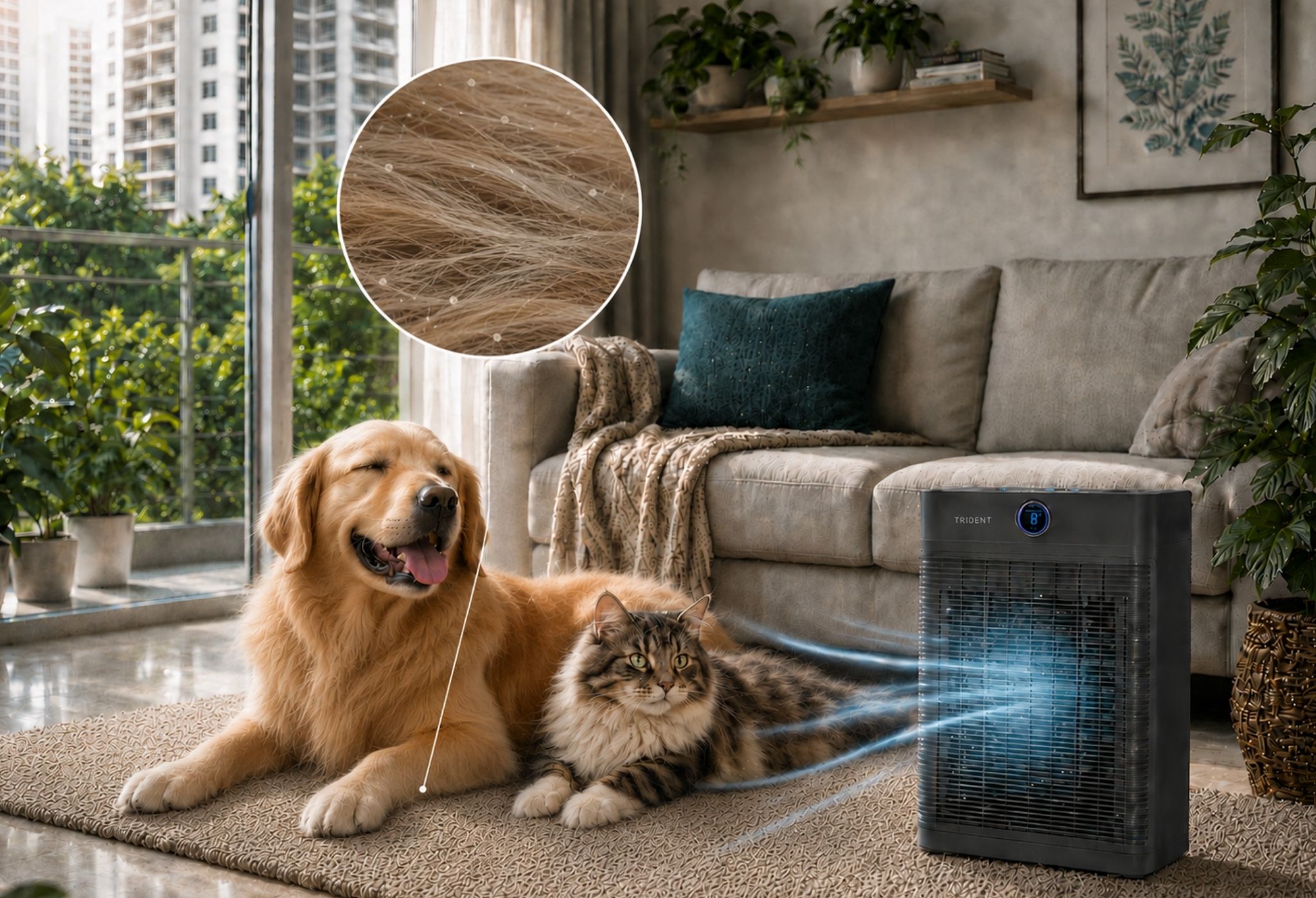
Pets
Pets bring companionship and joy to millions of households.
They also contribute to indoor air in several ways.
Examples include:
- Hair
- Dander
- Outdoor dust carried indoors
- Soil on paws
- Natural odours
Contrary to popular belief, many people are actually allergic to proteins found in pet dander and saliva rather than the fur itself.
Regular grooming and cleaning help reduce these allergens indoors.
Dust Never Stops Arriving
One of the most common questions homeowners ask is:
“Why does dust come back just days after cleaning?”
The answer is simple.
Dust is constantly being generated.
Indoor dust comes from many sources:
- Clothing fibres
- Skin flakes
- Outdoor soil
- Plant material
- Insect fragments
- Pet dander
- Textile fibres
Every time someone walks across a room, tiny settled particles become airborne again.
Dust is therefore not a sign of poor housekeeping—it is simply part of living indoors.
Mould: A Tropical Challenge
Singapore’s climate is ideal for many plants.
Unfortunately, it is also ideal for mould.
Mould requires three things:
- Moisture
- Organic material
- Time
Bathrooms, kitchens, wardrobes, window frames and poorly ventilated bedrooms often provide suitable conditions.
What many people don’t realise is that visible mould is only part of the issue.
Mould reproduces by releasing microscopic spores into the air.
These spores are invisible.
Once airborne, they can travel throughout the home before eventually settling onto new surfaces.
Controlling moisture is therefore the first step in preventing mould growth.
Air Conditioning: Friend or Foe?
Air-conditioning itself does not create pollution.
In fact, it improves comfort by lowering temperature and removing some moisture.
However, because air-conditioned rooms usually remain closed, pollutants generated indoors may have fewer opportunities to escape.
Poorly maintained air-conditioning systems may also accumulate dust and moisture over time, highlighting the importance of regular servicing.
Air-conditioning and good indoor air quality should work together—not replace one another.
Why Modern Homes Behave Differently
Today’s homes are generally better insulated than older buildings.
This improves energy efficiency.
However, greater airtightness also means pollutants remain indoors for longer unless ventilation or air cleaning removes them.
In many ways, modern homes require more deliberate indoor air management than houses built decades ago.
The Singapore Factor
Every country faces its own indoor air quality challenges.
In colder climates, homes are tightly sealed to retain heat. In desert regions, dust infiltration is a constant concern. In Singapore, our tropical environment presents a unique combination of conditions that influence the air inside our homes.
High humidity, year-round warm temperatures, heavy reliance on air-conditioning, dense urban living and occasional transboundary haze all shape the indoor environment.
Unlike countries with distinct seasons, Singapore’s homes rarely receive prolonged periods of cold, dry air that naturally suppress mould growth. Instead, moisture is an everyday reality. Bathrooms remain damp after showers, wardrobes can trap humid air, and condensation may form on cool surfaces. These seemingly minor conditions can create an environment where mould thrives if left unmanaged.
Urban living adds another layer of complexity. Most Singaporeans live in apartments where ventilation depends on building orientation, neighbouring units and weather conditions. During haze episodes or periods of heavy traffic pollution, opening windows may not always improve indoor air quality. Homeowners often have to balance fresh-air ventilation against outdoor pollution levels.
These unique circumstances make indoor air quality a year-round consideration rather than an occasional concern.
Clean Air Is About More Than an Air Purifier
One of the biggest misconceptions is that buying an air purifier alone will solve every indoor air problem.
Indoor air quality is best understood as a system with four components:
- Source Control
Reduce pollutants before they enter the air.
Examples include:
- Choosing low-emission materials during renovation.
- Repairing water leaks quickly.
- Avoiding unnecessary indoor smoking.
- Using appropriate cleaning products.
The cleanest pollution is the pollution that is never created.
- Ventilation
Fresh outdoor air helps dilute indoor pollutants when outdoor conditions are favourable.
Simple actions such as opening windows at suitable times or using kitchen exhaust systems while cooking can make a meaningful difference.
However, ventilation is not always ideal. During haze episodes or when outdoor pollution is elevated, homeowners may choose to keep windows closed and rely on other strategies.
- Humidity Control
Humidity plays a surprisingly important role in indoor air quality.
Excess moisture encourages mould growth and can create musty odours.
Managing humidity through good ventilation, prompt repair of leaks and appropriate use of air-conditioning or dehumidification helps create a healthier indoor environment.
- Air Purification
Even with good ventilation and careful housekeeping, some airborne particles and gases remain.
Air purification provides an additional layer of protection by continuously treating indoor air as it circulates through the room.
Rather than replacing ventilation or cleaning, it complements these measures as part of a broader indoor air quality strategy.
Myth vs Fact
Myth:
“If my house looks clean, the air must also be clean.”
Fact:
Many pollutants are completely invisible. Fine particles, formaldehyde and numerous gases cannot be seen with the naked eye.
Myth:
“I only need to worry about air quality during haze season.”
Fact:
Haze is only one source of air pollution. Cooking, furniture, cleaning products, mould and daily household activities influence indoor air quality throughout the year.
Myth:
“New homes always have cleaner air.”
Fact:
Newly renovated homes may temporarily contain higher levels of VOCs and formaldehyde due to off-gassing from new building materials and furnishings.
Myth:
“If I can’t smell anything, there’s no pollution.”
Fact:
Many pollutants have little or no noticeable odour.
Practical Tips for a Healthier Home
Improving indoor air quality doesn’t necessarily require major renovations. Small habits, practiced consistently, can have a meaningful impact.
- Use your cooker hood whenever frying or stir-frying.
- Repair water leaks promptly to discourage mould growth.
- Allow newly purchased furniture and renovation materials time to off-gas in a well-ventilated space where practical.
- Clean and maintain your air-conditioning system regularly.
- Vacuum and dust frequently to reduce the build-up of settled particles.
- Avoid excessive use of scented sprays if they are not needed.
- Monitor indoor humidity, particularly in rooms prone to dampness.
- Consider using an appropriately sized air purifier for occupied spaces.
No single action is a complete solution, but together they contribute to a healthier indoor environment.
Frequently Asked Questions
Is indoor air always more polluted than outdoor air?
No. Indoor air quality varies widely depending on the home, the activities taking place indoors, ventilation and outdoor conditions. However, certain pollutants can reach higher concentrations indoors if they accumulate over time.
Why does my bedroom feel stuffy in the morning?
Bedrooms are often closed overnight. As people breathe, carbon dioxide levels rise while ventilation remains limited, creating a sensation of stale or stuffy air.
Can opening windows solve all indoor air problems?
Opening windows helps when outdoor air quality is good. During haze or periods of elevated outdoor pollution, it may introduce additional pollutants into the home.
Why does my newly renovated home have a strong smell?
Many renovation materials release VOCs, including formaldehyde, especially when they are new. These emissions generally decrease over time.
Is dust the biggest indoor pollutant?
Dust is one component of indoor air quality, but it is only one of many. Gases, fine particles, allergens and biological contaminants also play important roles.
Key Takeaways
- Indoor air quality is shaped by everyday activities as much as by outdoor pollution.
- Modern homes can allow pollutants to accumulate because they are more enclosed.
- Common indoor pollutants include fine particles, VOCs, formaldehyde, mould spores, allergens and odours.
- Improving indoor air quality requires a combination of source control, ventilation, humidity management and air purification.
- Understanding the sources of pollution is the first step toward creating a healthier home.
From the Trident Lab
Indoor air quality is often discussed as though there is a single “bad actor.” In reality, homes contain a complex mixture of particles, gases and biological contaminants that behave differently in the air.
Our engineering philosophy has therefore always been to view indoor air as a dynamic system rather than focusing on a single pollutant. Effective indoor air management considers airflow, pollutant generation, humidity and continuous air treatment together, because no single approach can address every aspect of indoor air quality.